I do not play video games, but despite watching my friends defeat wizards and complete quests on their computers I have never considered the workers behind the games. The video game industry, worth over $43 billion in 2018[i], is known for their unfair treatment of workers. Times reporter Alana Semuels explains how near the release of a game, most developers are expected to work 100-hour weeks, also called the “crunch”, followed by a large lay-off of staff after the launch. Companies are able to do it because there is an “endless supply of people willing to work in the industry.”[ii] These terrible hours and job uncertainty at most companies in the industry have led many workers to consider unionization in the industry. In this blog I will argue that unionization is needed to for workers’ rights to create healthier conditions and compensation.

Workers experience negative psychological and financial effects from the conditions they work in. What are the main drivers of this issue? There are two major reasons why the industry is designed to treat employees this way, player expectations and workforce demand. Technology has developed so that players expect more from their games. The shift from in-store games to online, downloadable content has made players expect new content more frequently. Hassan Minhaj explains on his Netflix show Patriot Act how games like Fortnite, the most successful video game in the industry, is free to download but earns revenue by creating micro-transactions, such as “skins” and “weapons”, for users to buy.[iii]This system requires developers to focus on keeping players interested and spending money, which creates the “crunch” cycle and leads to layoffs.
This leads to the second main driver of this poor treatment, which is the belief that working in the games industry is a privilege. Many people who grew up playing videogames think of game development as dream job, so supply in the industry has always been higher than demand. Semuels explains that this is why workers do not fight the outrageous hours they’re asked to work because “you should be willing to do whatever it takes to stay [in the industry]” or else you’ll be replaced.[iv] Despite the ‘dream job’ mentality, the majority of workers do not receive decent salaries or benefits because of how executives are treated. Last year, Activision Blizzard’s executive Bobby Kotick made 306 times more than the companies average employee salary.[v] Module 3 explains that it is in non-unionized workplaces to not assert workplace rights and dispute resolutions during the time of employment.[vi] There is very little momentum among employees to take action against their poor treatment because there are no internal advocates for them and they are not protected.
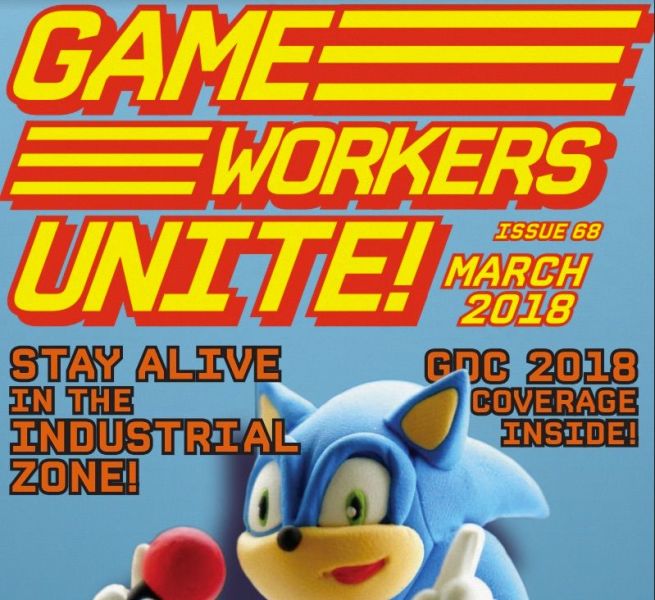
The poor working conditions has created a call for the industry to unionize. The most momentum on this has come from Game Workers Unite, a group run by game workers who discuss labour conditions among their 30 international chapters.[vii] The goal of unionization would be to better the working conditions of game developers to provide better hours and job stability.
Video game workers agree that they will be better off when able to “leverage their talent and experience to demand better conditions from the executives who profit off their work.”[viii]
EMPR 200 explores how unionization in this industry could focus on representation (contract negotiations and union-management relations) and internal capacity (member education on rights and member engagement)[ix] to meet workers’ needs. A recent survey conducted by the International Game Developers Association found that 47% of workers would support a union, compared to the 26% in support ten years ago.[x] This furthers the increasing need for better worker treatment as technology and the industry further develops and the strain on workers increases. Unions have been successfully implemented in industries with similar working conditions than gaming. The Screen Actors Guild is a union for Hollywood workers also in an environment where they use their creative talent to large, short-term projects that could be “hits or flops”.[xi] The success of unionization has been seen before and could be replicated by game developers.
Unionization is needed to improve working conditions and compensation for workers. Currently, the average developer is expected to remain with their employers for 3 years or less.[xii] Adding benefits including health care and pension will give workers more certainty in case they lose their jobs. Union objectives explained in Module 3 show how a union would solve the issues that workers in the video game industry are concerned about. A union could improve the terms and conditions of work, protect against arbitrary management action, and create social and economic change[xiii] to improve the treatment of developers. Overall, helping workers feel more supported in the industry will benefit the them by adding a layer of protection that does not currently exist.
Although unionization seems necessary, several criticisms have resulted in slow progress. One criticism is that unionization will not prevent layoffs or studio shutdowns. Schrider explains how unionization will not provide money to struggling companies or cut down executive salaries.[xiv] However, the severance and benefits mentioned above will protect workers during shutdowns and push for better compensation may lead to redistribution of executive salaries. Another critic is that unionization will force companies to shift production to cheaper countries. Although this has been seen across countless countries, Schrider reminds us of how expensive it would be for big studios to move all their production to another country, possibly a larger cost than to accommodate for unionization.[xv] Overall, the criticisms of unionization in the video game industry can be met by exploring the benefits of worker protection.

In conclusion, unionization in video game companies would protect workers and benefit the long-term creativity and sustainability of the industry. By changing the power dynamic to give developers a voice in their employment relations, their talents will be more useful to the industry. The current system of overworked, under compensated workers is not healthy for workers or the studio. As technology improves and users expect more from their games, it is time for the industry to revaluate the use and treatment of their developers. Schrider summarizes how unionization can improve worker treatment: “Right now power belongs to the executives. There’s only one real way to change that.”[xvi]
[i] Schreier, Jason. (2019, April 4). Making Video Games is Not a Dream Job. The New York Times. https://www.nytimes.com/2019/04/04/opinion/video-games-layoffs-union.html
[ii] Semuels, Alana. (2019, June 11). ‘Every Game You Like Is Built on the Backs of Workers.’ Video Game Creators Are Burned out and Desperate for Change. Time Magazine. https://time.com/5603329/e3-video-game-creators-union/
[iii] Schreier, op. cit.
[iv] Semuels, op. cit.
[v] Schreier, op. cit.
[vi] Weinberg, B. (2020, January). Union and Non-Union Workplaces. EMPR 200. Queen’s University. Kingston, ON.
[vii] Semuels, op. cit.
[viii] Yam, Kimberly. (2019, August 5). Hasan Minjaj Exposes Labour Issue in Video Game Industry. Huffington Post. https://www.huffingtonpost.ca/entry/hasan-minhaj-labor-issue-video-game-industry_n_5d4875bae4b0ca604e3686c9?ri18n=true
[ix] Weinberg, B. (2020, January). Union and Non-Union Workplaces. EMPR 200. Queen’s University. Kingston, ON.
[x] Semuels, op. cit.
[xi] Ibid.
[xii] Ibid.
[xiii] Weinberg, B. (2020, January). Union and Non-Union Workplaces. EMPR 200. Queen’s University. Kingston, ON.
[xiv] Schreier, op. cit.
[xv] Ibid.
[xvi] Ibid.


 Margaret Wilkins Blog
